Saturday, August 1, 2009

Mozart- By Peter Gay

Chapter 1- The Prodigy

Here’s a picture of the portrait of ten-year-old Mozart by Michel Barthelemy Ollivier.


Mozart’s first recognized genius piece No. 29 in A Major (page 14)- http://en.wikipedia.org/wiki/Symphony_No._29_(Mozart)

At the end of the chapter, Mozart talks about his height and not being able to reach St Peter’s statue to kiss his toe (a superstition). Here’s a picture of that statue


Chapter 2- The Good Son

Page 31- Mozart composed Mitridate, re di Ponto, an opera, at the age of 14

http://www.youtube.com/watch?v=PPO5YqoK_aU

Mozart’s piece the E-flat Piano Concerto (K. 271) written at age 21- Page 33

http://www.youtube.com/watch?v=JXoaYOM8n94&feature=PlayList&p=6CD6DB5C94D0A369&playnext=1&playnext_from=PL&index=3

Mozart’s piece nicknamed the Paris Symphony- Page 40

http://www.youtube.com/watch?v=Sq0kOPlLPys

Chapter 3- The Servant

Mozart’s piece nicknamed the “Posthorn” Serenade in D- Page 57

http://www.youtube.com/watch?v=I4-5eWcLRko

Mozart (wanting to get out of Salzburg) wrote this opera- Idomeno, re di Creta, a major opera (page 58). This scene shows a Baroque dance

http://www.youtube.com/watch?v=7dYvX6IxkIM

Here’s a picture of Count Colloredo, who Mozart served (mentioned throughout Chapter 3)

Chapter 4- The Freelance

A picture of the Burgtheater where many of Mozart operas had their premieres in Vienna (page 66)

Here’s a picture of Mozart’s wife, Constanze Weber. They married in 1782 (page 71)

1781’s German opera, Die Entfubrung aus dem Serail, by Mozart (page 80)

http://www.youtube.com/watch?v=Z1P_OxTq7rI

Chapter 5- The Begger

Here’s a picture of Mozart’s two sons talked about in this chapter. They were 2 out of 6 children who actually lived to adulthood.

Chapter 6- The Master

Here’s Mozart’s “Jupiter Symphony” a string quintet written in his later years (page 102) which he wrote in 16 days

http://www.youtube.com/watch?v=Fcly8-RGhgw

Another famous work, Mozart’s Concerto no 20 (K. 466) on page 105

http://www.youtube.com/watch?v=VtTqpqGIIYU

Mozart’s String Quartet K 515 in C Major (page 110)

http://www.youtube.com/watch?v=VpWTJTX4GeQ

Chapter 7- The Dramatist

Mozart’s Le Mariage de Figaro (page 126) who collaborated with da Ponte to create the opera

http://www.youtube.com/watch?v=iZJyYMhgw6Y&feature=PlayList&p=F671E6FB008DF8B8&index=29

Here’s a picture of da Ponte and Mozart

Chapter 8- The Classic

The irony of Mozart writing the Requiem, a mass for the dead, while dying- here’s what it sounds like- http://www.youtube.com/watch?v=Zi8vJ_lMxQI


Friday, July 31, 2009

Concert on the Green: Wind Orchestra


On July 26, 2009 I went to the Concert on the Green at Concordia University Irvine performed by the wind orchestra and conductor, Jeff Held. There were two parts of the concert with an intermission, and both parts were similar yet different. The instruments used were wind orchestra instruments, but also vocals. This reminded me of Music: In History and matching the instruments with their sound, because many of the same instruments were used. My favorite piece was The Lion King because it reminded me of my childhood and I think a lot of the audience connected to that piece and reminded me of what we had to write about for Music: As Feeling. This concert also tied together what we learned about in Music: Assimilation about Bach and Mozart. Also, I found that many of the songs dynamics used both soft and loud parts to emphasize. I really enjoyed the concert and it was a great way to spend my Sunday.

The first part of the concert had the pieces, The Star-Spangled Banner, American Salute, Adagio for Winds, Leudamus Te, Arioso, Canticle: All Creatures of Our God and King, and Overture to “Candide.” Most of these pieces are not as modern as the second half pieces. Mozart and Bach both had pieces in this section so it was very classical and a great tribute to their time. The second half of the concert had the pieces, Klezmar Classics, Block M, The Lion King, I Dreamed a Dream, Old Ironsides, and The Ultimate Patriotic Sing-Along. Many of these pieces were more modern than the first half. However, the patriotic spirit of many of the songs tied the whole concert together really well.

The main types of instruments used in the wind orchestra are woodwinds, percussion and brass instruments. This concert also used vocal by Natalie Hovespian. The woodwinds consisted of flutes, clarinets, oboes and perhaps bassoons. I could definitely hear the flutes during many of the pieces, one of them being Overture to “Candide.” The percussion consisted of drums and cymbals, and I could hear the drums during many of the marches and patriotic songs. I liked the sound of a wind orchestra better in comparison to the blues concert I went to.

There were a lot of kids at the concert and the atmosphere was made for it to be open for everyone. My favorite piece was probably one of the songs the kids liked the most, The Lion King. This really reminded me of what we learned while doing the Music: As Feeling unit because when writing that blog I discussed how when listening to music it can bring you back to a certain time. Listening to The Lion King brought me back to being a kid and watching the movie and it was a really fun song to put in a concert.

Another part of the concert that connected back to what we have learned was the pieces by Bach and Mozart. I know I spent a lot of time doing the unit Music: Assimilation by doing mymusiclab.com and the chapters on Bach and Mozart. With that unit you only get to listen to one piece by them so it was great to hear some other pieces and really connected to what I had learned. Also, during that unit we had to go through the elements of music. One of the biggest things I remembered and heard during the concert was dynamics. Many of the songs used softness and loudness to emphasize parts of the song. Block M Concert March was one of the songs that used dynamics.

After seeing and hearing the wind orchestra perform at The Concert on the Green at Concordia University Irvine, I really have a better appreciation for classical music. I also have tied it to many of the things we have learned this summer about music. I liked how even though the concert was in two parts there was a strong patriotic vibe that went through the entire concert. Also, I could really identify many of the instruments that performed. The Lion King was my favorite piece performed and it reminded me of the unit Music: As Feeling. Also, the Bach and Mozart pieces, and the use of dynamics reminded me of the Music: Assimilation unit. I really enjoyed this concert and definitely would want to see another wind orchestra performance at Concordia while I’m going to school here.

Monday, July 20, 2009

Conclusion: Triumph of Music

The new moving ages of cinema and television with music is an amazing technological innovation. The stars that are on TV and radio have become huge with status, popularity, and wealth and play an important role in social and political change. The relationship between music and TV is beneficial but not equal. "Music can exist without the moving image, but the moving image can not exist without music," Blanning says in The Triumph of Music. And this is just one part of the advances music has brought us.

Music has been transformed in the modern world and has helped transform it. What we have seen is the status, purpose, places and spaces, technology, and liberation of music and musicians.

Liberation

The Triumph of Music describes liberation as freedom as a nation, people, or sex and the relationship it has to music.

English and British nationalism was portrayed in the music-drama King Arthur and King Alfred. Composed by Henry Purcell, here’s a clip http://www.youtube.com/watch?v=le4fhX50X94

One of Paris’ political songs during the Revolution was Ladre by Becourt, violinist at the Theatre du Vaudeville. The lyrics translated mean to get rid of nobles and priests all together. Here’s a clip http://www.youtube.com/watch?v=35UnkTdPhO0

But an even more famous revolutionary song, and now national anthem is Merseillaise heard here http://www.youtube.com/watch?v=4K1q9Ntcr5g

In Russia, the opera Boris Godunov represented the fall of the tsar. Here’s a clip http://www.youtube.com/watch?v=pVSOnvNYU-8

Race was a major struggle in music and to prove her point Marian Anderson in 1939 when she was refused permission to sing in Washington D.C.’s Constitution Hall performed at the Lincoln Memorial. Here’s a speech and clip from that day http://www.youtube.com/watch?v=AkPI0VKM4Fk

Music was influential during the time of Martin Luther King Jr as well, and right before his famous “I have a dream” speech Mahalia Jackson sang. http://www.youtube.com/watch?v=glLESOK582Y

Sexual liberation was sung by Elvis Presley, The Beatles, The Rolling Stones, and Led Zeppelin. Here’s a clip of Led Zeppelin playing in 1973 http://www.youtube.com/watch?v=N9i2fqxSjTI

Technology

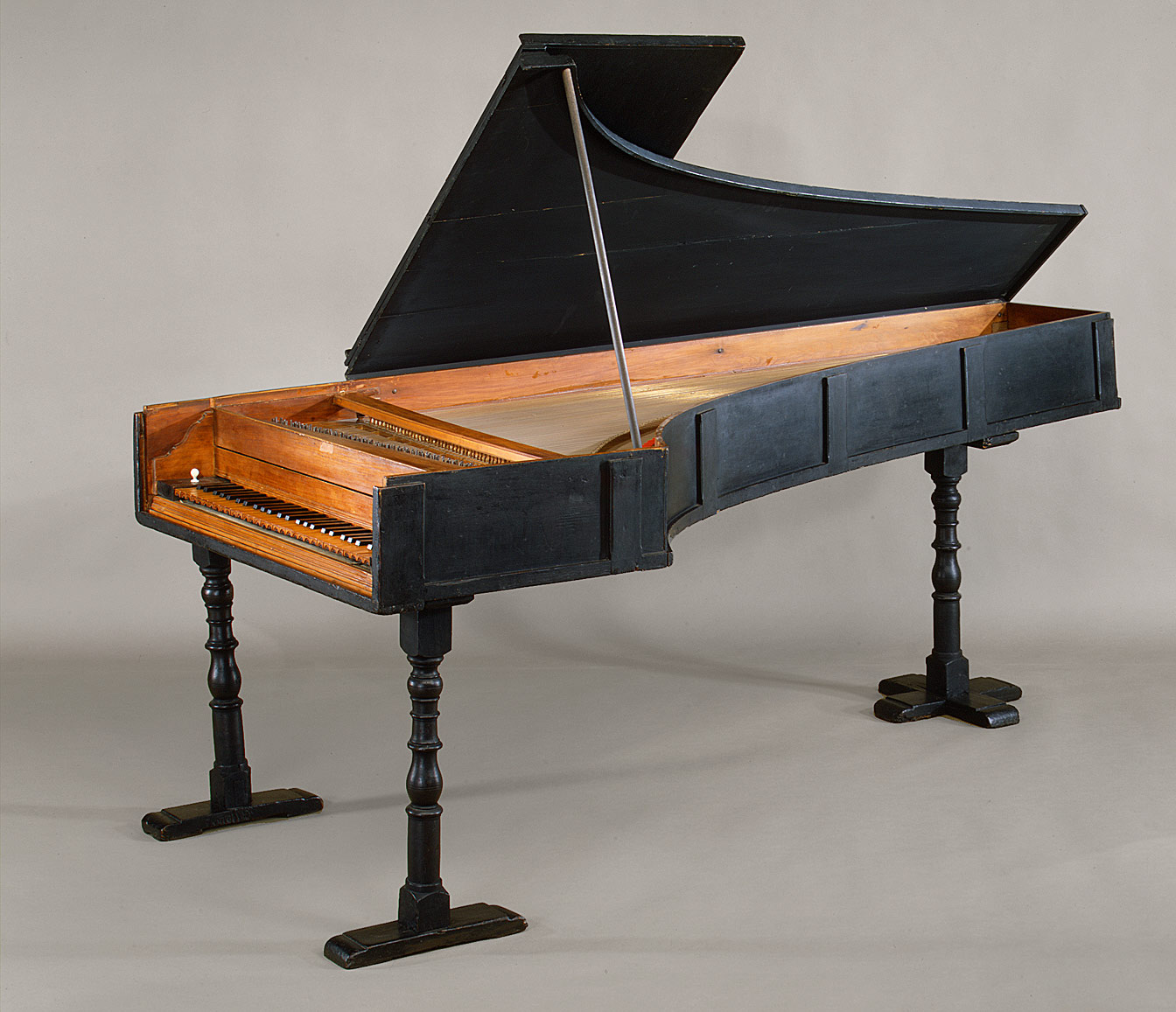
One new technology was created because there was a need for an instrument that would be more expressive and combine the power of the harpsichord with the range of the clavichord. Barolomeo Cristofori created the fortepiano, which eventually became the keyboard we see today. Here’s a picture http://www.metmuseum.org/toah/images/h2/h2_89.4.1219.jpg.

Another new technology was the ability to produce instruments so that the middle class could afford and play them. This was also true of literature, and Elizabeth Gaskell wrote about instruments and the 1800’s. Here’s an article about her http://www.online-literature.com/elizabeth_gaskell/

Salvation Army bands brought religious music onto the streets of Great Britain. Here’s a picture. http://www.northdevongazette.co.uk/northdevongazette/flatfiles/features/2006/ilfvictorian/band.gif

The biggest technological advances in music came in the end of the nineteenth century with recording, radio, and eventually TV. The first jazz musician to demonstrate the importance of recording was Louis Armstrong, with his Hot Five and Hot Seven recordings. Here’s a clip of Hot Five - http://www.youtube.com/watch?v=ksmGt2U-xTE

The next big thing was TV and NBC transmitted Toscanini’s famous concerts with the New York Philharmonic in 1948. http://www.youtube.com/watch?v=Nt7pPKXDhPc

Purpose

The purpose of music has changed throughout time. From assertion to power, money, pleasure or for dancing, there are several purposes music had in the past.

Louis XIV and the assertion of power lead to Louis XIV wanting the best of everything including music and dancing. Here’s a picture of him https://blogger.googleusercontent.com/img/b/R29vZ2xl/AVvXsEiEL1JdyMBWQkisSIztHwdN_JRvA4QLPG-wDzHjFt2ymSqO2CbPXdoUBAcH8PVSnMPX9Bk3_U9hLLJY9S99L56Ptjv2gj9RQppGvl2tHFGObOCO1M1dxU2v-idpvqike0wRxShMt3g-JZ0M/s320/300px-Louis_XIV_of_France.jpg

One purpose of music was the worship of God. Bach’s St Matthew Passion was a performance for Good Friday in Leipzig. Here’s a clip. http://www.youtube.com/watch?v=M_LLFfFXaUA

Another performance that’s purpose was for the worship of God was Messiah by Handel performed in 1742 seen here http://www.youtube.com/watch?v=nnHksDFHTQI

Another purpose was the new ideals from the movement of Romanticism. Beethoven led this with the new ideas of music having a complete absence from God. This is shown in Beethoven’s third symphony Eroica, symphony no. 3 in E-flat Major. Here’s a clip http://www.youtube.com/watch?v=FFltqVS8d9I.


Jazz and romanticism was a spontaneous, improvisatory, and individual type of music started after World War II. A great example of this is John Coltrane playing A Love Supreme composed in 1964. The purpose of this song was self-expression and talked about addiction. Here’s a clip http://www.youtube.com/watch?v=92T4DQqQApE

Status

In the beginning of music, musicians were like servants or slaves. Later, with Haydn, Mozart, and Beethoven there becomes a liberation.

One of the most memorable musical moments of modern Europe was a performance of The Creation in the main hall of the University of Venice for Haydn in 1808 for his 76th birthday. Here is a clip of The Creation performed by the London Symphony Orchestra. http://www.youtube.com/watch?v=vAxXDt9dOrE

What Mozart and Haydn have in common is their massive contribution to raising both the status of music, by the quality of their compositions, status of the musician, and demonstration of what could be achieved in the rapidly changing social and cultural conditions of the late 18th century. Mozart’s international reputation was at its highest right after he showed the first performance of La Clamenza di Tito in Prague and The Magic Flute in Vienna in September 1791, both high quality opera serias.

Here’s a clip of The Magic Flute by the Met Orchestra.

http://www.youtube.com/watch?v=bFdB8Zz8VOo&feature=PlayList&p=E616D683968748BF&index=1

Musicians were also looked at as heroes. One example is violinist Niccolo Paganini. Read more about this virtuoso here. http://www.paganini.com/nicolo/nicindex.htm

The next phase of musicians status is an apotheosis, almost putting them as royalty or god-like beings. One example of this is the knighting of musicians. The United Kingdom did this in an extremely formal honor, even though politicians tried to stop it.

Introduction: Triumph of Music

The Triumph of Music by Tim Blanning discusses the rise of composers, musicians and their art. It talks about status, purpose, places and spaces, technology and liberation of these musicians. This is what Blanning calls, “music’s march to cultural supremacy.” We see an example of all of these qualities during the Jubilee Concert in 2002 for the Queen.

There was the elevated status of musicians- compiled were the most famous and rich creative artists. The place and space was significant in the way that it was at Buckingham Palace, where the sound was made possible by technology. And the messages were all about liberation- for women, young, ethnic minorities, gays, etc. The purpose was a royal celebration and great festival and here's a website with pictures of the event - http://media.photobucket.com/image/jubilee%202002%20concert/RoyalProtocol/155263C7-1.jpg.

Saturday, July 4, 2009

Blues Concert


Theo and the Zydeco Patrol

On June 27, 2009 I went to the Long Beach Bayou and Mardi Gras festival. The band I watched was called Theo and the Zydeco Patrol, which consists of Theo Bellow who plays guitar and sings, and four other members. The instruments they played reminded me of what we learned about blues but they also had a more southern zydeco twist. The members of the band took turns playing solos, which reminded me of learning about Louis Armstrong’s West End Blues. The spirit of the festival reminded me about what we learned about jazz and blues and the American spirit. It also resembled improvisation a lot. Theo and the Zydeco Patrol really embodied blues and improvisation, which is what we just learned about.

The instruments that Theo and the Zydeco Patrol used represented blues. There were two guitar players and two players playing different types of drums and an accordian player. The guitar and the way that Theo sang really represented blues and reminded me of hearing Robert Jackson in our e-book. However, the accordian player was an interesting sound and really represented southern zydeco and gave it more of a funky sound. The music was more blues than jazz because there wasn’t a brass instrument. However, at one point they did use a trumpet to play As The Saints Go Marching In and switched it in instead of a guitar.

The form of the songs was like Louis Armstrong’s West End Blues. Each player would do a solo but they all sounded similar and other players would play their instruments as background throughout. Some of the songs were pretty long because of all the solos and it made for interesting music to listen to. Most of the songs were faster than one we had listened to as well.

The mood and atmosphere at the festival was very fun. Everyone was dancing and having a good time and it reminded me of what we read about American spirit and jazz. Jazz music brought about a mixture of optimism and realism and this music definitely did that. The article we read talked about how jazz music was made to dance to and it was definitely hard not to dance when the music made you feel good about yourself and had a happy beat. Since it was a festival there was southern food and drinks and really captured the feeling of New Orleans.

I also liked how Theo and the Zydeco Patrol used a lot of improvisation, which was what our last unit was all about. You could see the band members playing off each other and during each solo they had a chance to use improvisation and it made the experience a lot of fun. The improvisation had a lot to do with blues and that was definitely a key point the band was trying to make.

When going to see Theo and the Zydeco Patrol I really didn’t know what to expect. It was a great way to hear blues music with a fusion of zydeco that was interesting and because we were at a music festival the atmosphere was fun and there was a lot of dancing. The instruments used were similar to blues but also different because of the zydeco twist in the music. It also reminded me of Louis Armstrong’s West End Blues because of how each instrument took turns playing solos. It reminded me of jazz as well because it used optimism and a happy beat to create a great and fun atmosphere. The improvisation that the band used really related to what we had been learning in class too.

Friday, July 3, 2009

Music: Improvisation

Improvisation and Jazz

Reading about improvisation had a closer impact and related more to my life than some of the other units we’ve looked at. I liked watching Victor Borge and Anton Kontra play an encore together of a song that Victor had never played before, only heard. This reminds me a lot of concerts or music festivals that I go to today and sometimes performers of two different genres will play together and learn each other’s music and have to use improvisation and it makes for a really great show. An example would be Snoop Dogg (hip-hop/rap) and Slightly Stoopid (mixture of acoustic rock, blues, and reggae) doing a tour together this summer and having to complement one another when playing.

I also liked learning about jazz and Louie Armstrong. The video we watched where it tried to show notes for what Louie Armstrong was playing was incredibly amazing because he played so fast and different that it’s hard to write music for other people to imitate him. I also like the comparison we read between the development of jazz music and our country politically because at the same time there were so many American developments in music and politics. Jazz definitely is an expression of American spirit and from traveling to New Orleans years ago I remember it having a lasting impression on me.


Tuesday, June 30, 2009

Music: As Feeling

What Makes Music Meaningful

Through reading the articles in this unit and from experiencing and playing music myself, there are many things that make music meaningful. Renee Fleming discusses in her introduction about how she had to shape her voice but how it shaped her as well. From The Philosophy of Music, we look at the similarities between reading/writing and music and how it educates us and makes us feel. From personal experiences, I can say that music is one of those things that can make you remember a certain time or bring you bake to a special memory sometimes more than reading or seeing a picture of that experience. Music also is a way to express yourself when composing, playing, or listening by what you choose to listen to. Music is meaningful is many different aspects, as much as other subjects we learn and sometimes even more meaningful.

Renee Fleming is a world known opera singer from New York. In the introduction of her book she discusses how learning music not only teaches but changes you. I like the comparison she makes with finding her voice and horse novels, as that she found her voice and worked to shape it, just as much it shaped herself. This is similar to when a girl finds a wild horse and sees potential in it and sticks by it no matter what and in return for her devotion it gives her a victory she never thought possible. Learning music doesn’t just teach us, but changes us was her main point.

When reading The Philosophy of Music, we see how music creates the ability to put our thoughts down in an intelligent manner, just as much as reading and writing the thoughts down are. The author, Bennett Reimer, discusses how you experience and share feelings through creating and listening to music. Also, there is a type of improvement where sometimes you can improve open a composed piece by changing a tone and making the feeling more real and clear to the listener. I think this is important because when conveying a mood, feeling, or idea through song, if it’s best to have the feeling clearly identified so that the listener can easily know what the composer was feeling and relate to it and identify with it. This is the same with reading or writing about feelings and experiences, and improvement is a key aspect to that.

Along with the comparisons of reading and writing to music, expressing yourself through music is a major way that it is meaningful. When you compose a song and can express yourself in that music style, with specific lyrics, the instruments that are used, etc., you create something unique and one-of-a-kind that is meaningful to what you want to express. This is like writing because you get to create something and put your emotions and feelings into it and words can be used with both, but unlike writing it is something you hear and feel. There are times when unlike a quote someone wrote or a lyric someone wrote, a certain guitar riff or melody in a song that someone wrote to express himself/herself will impact me more and be more meaningful that a story or poem.

Another way that music is meaningful is not only by the feelings and expressions it creates, but the memories it can remind you of. Music to me is meaningful because when hearing a song from a specific time it can remind me of a past memory in an either good or bad way. People in relationships pick songs, you listen to music at major events in your life- graduation, dances, weddings, funerals, or being at a concert and hearing certain songs performed are all ways in which music is a part of our everyday life. Hearing a certain song can remind me of good or bad times, unlike seeing a picture of that event or reading something you wrote about that event. Music definitely has an impact in your brain and reminds you of certain events and is very meaningful in that way.

There are so many things that make music meaningful. Renee Fleming wrote about how learning about her voice and trying to change it actually changed her own identity. We read about how improvement when composing music or hearing music is compared to writing and reading and can be meaningful to people. Also, music is a major way to express your feelings and identity. And music can remind you of past events and memories that sometimes pictures and words can not, which makes it an even more meaningful tool than reading and writing. Music is meaningful in so many ways, and in different ways to each person who hears or composes it.

Wednesday, June 17, 2009

Music History

The Red Violin and Music History

The movie, ‘ The Red Violin’, takes us though the history of music. It starts out in 1681 in Cremona during the Baroque era. The violin then travels to Vienna in 1793, the beginning of the Classical era. The story continues in Oxford, in the late 1890’s, where a talented composer owns the red violin. The violin is then in Shanghai during the Chinese Communist party movement which forbids Western music. The story ends in Montreal, during an auction for the red violin, in which a man switches the violin with a copy to give the original to his daughter as a gift. The plot of the movie takes us through what we learned about the history of music as well.

The story begins in Cremona, where a violinmaker and his wife are expecting a child. Bussotti had made many violins, but only considers this one (the one he’s making for his future son) a masterpiece. Anna, his wife, and the child die in childbirth because of her age, and Bussotti is extremely distraught. Bussotti uses his wife’s blood in the varnish to paint the violin giving it its red color. This compares a lot to what we read about Stradivarius violins and the amount of emotion and the dedication a violinmaker can put into a violin and make it a masterpiece.

The red violin is then donated to a German orphanage where a child prodigy is given the violin and impresses the monks enough to get a violin instructor, Poussin to come and adopt him. Poussin needs the child to make money because him and his wife are not well off financially, so he puts an enormous amount of pressure on the boy and has the boy, Weiss practice his piece slowly to then increase the tempo and play extremely fast. The strict amount of work that Poussin puts on the child leads to a heart defect and eventually leads to his death during the audition of a lifetime. This story reminds me a lot of what we learned about Mozart and how his father made him travel Europe as a child prodigy and how he eventually became one of the greatest classical musicians. The child played classical music very well, and the piece he played was very proper and orderly.

The violin ends up with grave-robber gypsies but Frederick Pope offers a place for the gypsies to live to own the violin. He is one of the greatest composers of his time, but he needs sex to inspire his compositions. This definitely brings in the era of Romanticism and ironically, the romance of Frederick and Victoria is the main idea of this part of the film. When Victoria is in Russia getting inspiration for her novel, Frederick cheats on her with a gypsy and Victoria returns and blames the violin for ruining their relationship and making Frederick cheat. These ideas are totally coinciding with the Romantic era of music.

Next, the red violin ends up in Shanghai in the late 1960’s during the Communist Party Revolution. It is forbidden for foreign ideology and western music to be used. Xiang, one of the party members, goes to get rid of the red violin, a gift from her mother, but wanting to prove her loyalty to the State gives it to a man named Chou. We learned a lot about the Cultural Revolution reading Listen to This, and about how communism affected classical music in China. The instruments used in Chinese classical music are different, however, and the musicians only use 5 notes instead of 7.

The final part of ‘The Red Violin’ shows a man named Duval who is an appraiser and restorer to antique instruments. Duval tries to play it off that the violin is not worth much even though he knows it is worth over a million dollars, but doesn’t believe other people can appreciate it like himself so switches it with a copy and then takes the expensive red violin as a gift to his daughter. This is the rebirth of the red violin.

So throughout watching ‘The Red Violin’ I learned a lot about music history and could compare it to what we learned in Listen to This. Violinmaking and the baroque era were the main focus of the beginning of the movie. The violin then was owned by a child prodigy who died from the stress, unlike the real child prodigy Mozart, and Beethoven. The composer Frederick Pope and his need for sex to inspire music showed the Romantic era of music. We also learned about the Communist Cultural Revolution and how western music was forbidden and the stresses it led to. ‘The Red Violin’ matched what we have been learning about music history and put it in a more emotional and real aspect with the fictional story.

Wednesday, June 10, 2009

History of Music- Stradivarius Violins

1. There are 609 violins, 12 violas, and 64 cellos of Antonio Stradivari currently accounted for throughout the world. 

2. The Los Angeles Philharmonic owns the Stradivarius that Martin Chalifour plays as concertmaster. The violin was made by Antonio Stradivari in 1729. 

3.  A concertmaster plays the crucial role as a mediator between the conductor and the musicians. They guide the orchestra toward an ideal sound. 

Monday, June 8, 2009

Music: in aesthetics, science, and "the spheres"

The Naked Saint and the Foundations of Ancient Greece relating to Music

The moral of The Naked Saint by Wackenroder is to explain how music can change us. Once the summer moonlight was so beautiful and the love created by the lovers on a boat nearby was so magnificent that music played. Once that music was heard, the naked saint was no longer tied to the giant wheel of Time, and the saint was released from the enchantment that gave it anxiety and made it crazy. It turned into a beautiful angel and danced up into the heavens. The moral of the story is to not let time overcome us, but that music and love can calm and change even the craziest being. Also, there is some irony in the fact that the naked saint was so angered by how others lived so carefree or by doing jobs he thought was worthless, when he himself was spinning a giant wheel of Time and so concerned about Time he couldn’t enjoy anything and was extremely unhappy.

This relates a lot to how the Ancient Greeks thought, even if it was talking more about aesthetics when the Greeks thought of music as more of a science. It especially related to a story about how the mathematician Pythagoras used music to save a member of his community from committing arson. Pythagoras played a different mode of music (not the Phrygian mode) and the youth became calm. This was another example of how music could change someone and the effects music has.

Also, in the story the naked saint is outside and the moonlight and probably the stars beauty was part of what created the music. In Ancient Greece, Pythagoras was an astronomer and musician, and music was viewed as a science as well as an art. When the stars and planets rotated in balanced proportions they made heavenly music- the music of the spheres, as said in “Music in Greek Philosophy,” just like in the story of the naked saint. Greek philosophers spoke of harmony throughout the universe, and how music on earth was simply the audible expression of that harmony. They believed by studying the ratios created by music we could comprehend the secrets of the universe. At the end of The Naked Saint, the saint travels to the heavens and it seems he fully understands the secrets of the universe now just like the Ancient Greeks believed music could.

Later, music was considered one of the seven liberal arts, still a science because all of the liberal arts required critical thinking and would free the mind. A Roman music theorist named Boethius also developed that music was divided into three general types: music of the spheres, music of the human body, and earthly vocal and instrumental music. He also showed a difference between someone who studies music and one who performs it, all in his manuscripts the Fundamentals of Music in the 5th and 6th century. The music from the naked saint would be part of the music of the spheres. 

Monday, June 1, 2009

Herman Being

The Main Characters of The Musical Ascent of Herman Being by Robert Danziger 

Herman Being is a 27 year-old computer processor living in New York trying to find love for a woman and especially for classical music. Jean is his love interest who is a bright grad student at NYU getting her masters degree in music. Ben Walden is a Brooklyn musician and longtime friend of Herman's Aunt Irene, and he helps Herman to better understand classical music. Lyall Pratt is the personnel manager at Herman's work, who takes the promotion Herman wants and eventually fights with Herman leading to a shooting and lawsuit. Other characters include Duncan Latren, an arrogant grad student and music critic at NYU, and Aunt Irene, a librarian at NYU.