Saturday, August 1, 2009

Mozart- By Peter Gay

Chapter 1- The Prodigy

Here’s a picture of the portrait of ten-year-old Mozart by Michel Barthelemy Ollivier.


Mozart’s first recognized genius piece No. 29 in A Major (page 14)- http://en.wikipedia.org/wiki/Symphony_No._29_(Mozart)

At the end of the chapter, Mozart talks about his height and not being able to reach St Peter’s statue to kiss his toe (a superstition). Here’s a picture of that statue


Chapter 2- The Good Son

Page 31- Mozart composed Mitridate, re di Ponto, an opera, at the age of 14

http://www.youtube.com/watch?v=PPO5YqoK_aU

Mozart’s piece the E-flat Piano Concerto (K. 271) written at age 21- Page 33

http://www.youtube.com/watch?v=JXoaYOM8n94&feature=PlayList&p=6CD6DB5C94D0A369&playnext=1&playnext_from=PL&index=3

Mozart’s piece nicknamed the Paris Symphony- Page 40

http://www.youtube.com/watch?v=Sq0kOPlLPys

Chapter 3- The Servant

Mozart’s piece nicknamed the “Posthorn” Serenade in D- Page 57

http://www.youtube.com/watch?v=I4-5eWcLRko

Mozart (wanting to get out of Salzburg) wrote this opera- Idomeno, re di Creta, a major opera (page 58). This scene shows a Baroque dance

http://www.youtube.com/watch?v=7dYvX6IxkIM

Here’s a picture of Count Colloredo, who Mozart served (mentioned throughout Chapter 3)

Chapter 4- The Freelance

A picture of the Burgtheater where many of Mozart operas had their premieres in Vienna (page 66)

Here’s a picture of Mozart’s wife, Constanze Weber. They married in 1782 (page 71)

1781’s German opera, Die Entfubrung aus dem Serail, by Mozart (page 80)

http://www.youtube.com/watch?v=Z1P_OxTq7rI

Chapter 5- The Begger

Here’s a picture of Mozart’s two sons talked about in this chapter. They were 2 out of 6 children who actually lived to adulthood.

Chapter 6- The Master

Here’s Mozart’s “Jupiter Symphony” a string quintet written in his later years (page 102) which he wrote in 16 days

http://www.youtube.com/watch?v=Fcly8-RGhgw

Another famous work, Mozart’s Concerto no 20 (K. 466) on page 105

http://www.youtube.com/watch?v=VtTqpqGIIYU

Mozart’s String Quartet K 515 in C Major (page 110)

http://www.youtube.com/watch?v=VpWTJTX4GeQ

Chapter 7- The Dramatist

Mozart’s Le Mariage de Figaro (page 126) who collaborated with da Ponte to create the opera

http://www.youtube.com/watch?v=iZJyYMhgw6Y&feature=PlayList&p=F671E6FB008DF8B8&index=29

Here’s a picture of da Ponte and Mozart

Chapter 8- The Classic

The irony of Mozart writing the Requiem, a mass for the dead, while dying- here’s what it sounds like- http://www.youtube.com/watch?v=Zi8vJ_lMxQI


Friday, July 31, 2009

Concert on the Green: Wind Orchestra


On July 26, 2009 I went to the Concert on the Green at Concordia University Irvine performed by the wind orchestra and conductor, Jeff Held. There were two parts of the concert with an intermission, and both parts were similar yet different. The instruments used were wind orchestra instruments, but also vocals. This reminded me of Music: In History and matching the instruments with their sound, because many of the same instruments were used. My favorite piece was The Lion King because it reminded me of my childhood and I think a lot of the audience connected to that piece and reminded me of what we had to write about for Music: As Feeling. This concert also tied together what we learned about in Music: Assimilation about Bach and Mozart. Also, I found that many of the songs dynamics used both soft and loud parts to emphasize. I really enjoyed the concert and it was a great way to spend my Sunday.

The first part of the concert had the pieces, The Star-Spangled Banner, American Salute, Adagio for Winds, Leudamus Te, Arioso, Canticle: All Creatures of Our God and King, and Overture to “Candide.” Most of these pieces are not as modern as the second half pieces. Mozart and Bach both had pieces in this section so it was very classical and a great tribute to their time. The second half of the concert had the pieces, Klezmar Classics, Block M, The Lion King, I Dreamed a Dream, Old Ironsides, and The Ultimate Patriotic Sing-Along. Many of these pieces were more modern than the first half. However, the patriotic spirit of many of the songs tied the whole concert together really well.

The main types of instruments used in the wind orchestra are woodwinds, percussion and brass instruments. This concert also used vocal by Natalie Hovespian. The woodwinds consisted of flutes, clarinets, oboes and perhaps bassoons. I could definitely hear the flutes during many of the pieces, one of them being Overture to “Candide.” The percussion consisted of drums and cymbals, and I could hear the drums during many of the marches and patriotic songs. I liked the sound of a wind orchestra better in comparison to the blues concert I went to.

There were a lot of kids at the concert and the atmosphere was made for it to be open for everyone. My favorite piece was probably one of the songs the kids liked the most, The Lion King. This really reminded me of what we learned while doing the Music: As Feeling unit because when writing that blog I discussed how when listening to music it can bring you back to a certain time. Listening to The Lion King brought me back to being a kid and watching the movie and it was a really fun song to put in a concert.

Another part of the concert that connected back to what we have learned was the pieces by Bach and Mozart. I know I spent a lot of time doing the unit Music: Assimilation by doing mymusiclab.com and the chapters on Bach and Mozart. With that unit you only get to listen to one piece by them so it was great to hear some other pieces and really connected to what I had learned. Also, during that unit we had to go through the elements of music. One of the biggest things I remembered and heard during the concert was dynamics. Many of the songs used softness and loudness to emphasize parts of the song. Block M Concert March was one of the songs that used dynamics.

After seeing and hearing the wind orchestra perform at The Concert on the Green at Concordia University Irvine, I really have a better appreciation for classical music. I also have tied it to many of the things we have learned this summer about music. I liked how even though the concert was in two parts there was a strong patriotic vibe that went through the entire concert. Also, I could really identify many of the instruments that performed. The Lion King was my favorite piece performed and it reminded me of the unit Music: As Feeling. Also, the Bach and Mozart pieces, and the use of dynamics reminded me of the Music: Assimilation unit. I really enjoyed this concert and definitely would want to see another wind orchestra performance at Concordia while I’m going to school here.

Monday, July 20, 2009

Conclusion: Triumph of Music

The new moving ages of cinema and television with music is an amazing technological innovation. The stars that are on TV and radio have become huge with status, popularity, and wealth and play an important role in social and political change. The relationship between music and TV is beneficial but not equal. "Music can exist without the moving image, but the moving image can not exist without music," Blanning says in The Triumph of Music. And this is just one part of the advances music has brought us.

Music has been transformed in the modern world and has helped transform it. What we have seen is the status, purpose, places and spaces, technology, and liberation of music and musicians.

Liberation

The Triumph of Music describes liberation as freedom as a nation, people, or sex and the relationship it has to music.

English and British nationalism was portrayed in the music-drama King Arthur and King Alfred. Composed by Henry Purcell, here’s a clip http://www.youtube.com/watch?v=le4fhX50X94

One of Paris’ political songs during the Revolution was Ladre by Becourt, violinist at the Theatre du Vaudeville. The lyrics translated mean to get rid of nobles and priests all together. Here’s a clip http://www.youtube.com/watch?v=35UnkTdPhO0

But an even more famous revolutionary song, and now national anthem is Merseillaise heard here http://www.youtube.com/watch?v=4K1q9Ntcr5g

In Russia, the opera Boris Godunov represented the fall of the tsar. Here’s a clip http://www.youtube.com/watch?v=pVSOnvNYU-8

Race was a major struggle in music and to prove her point Marian Anderson in 1939 when she was refused permission to sing in Washington D.C.’s Constitution Hall performed at the Lincoln Memorial. Here’s a speech and clip from that day http://www.youtube.com/watch?v=AkPI0VKM4Fk

Music was influential during the time of Martin Luther King Jr as well, and right before his famous “I have a dream” speech Mahalia Jackson sang. http://www.youtube.com/watch?v=glLESOK582Y

Sexual liberation was sung by Elvis Presley, The Beatles, The Rolling Stones, and Led Zeppelin. Here’s a clip of Led Zeppelin playing in 1973 http://www.youtube.com/watch?v=N9i2fqxSjTI

Technology

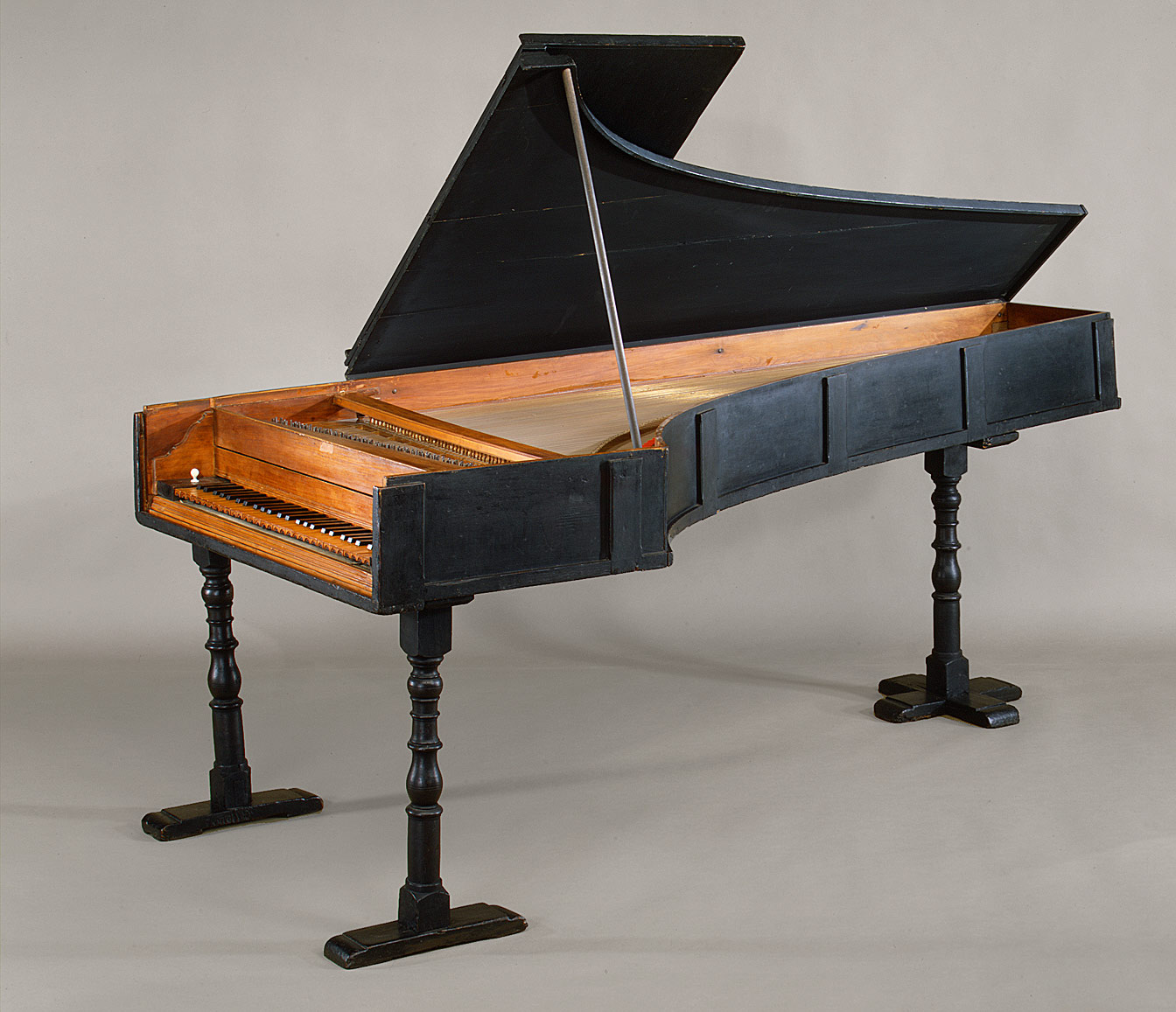
One new technology was created because there was a need for an instrument that would be more expressive and combine the power of the harpsichord with the range of the clavichord. Barolomeo Cristofori created the fortepiano, which eventually became the keyboard we see today. Here’s a picture http://www.metmuseum.org/toah/images/h2/h2_89.4.1219.jpg.

Another new technology was the ability to produce instruments so that the middle class could afford and play them. This was also true of literature, and Elizabeth Gaskell wrote about instruments and the 1800’s. Here’s an article about her http://www.online-literature.com/elizabeth_gaskell/

Salvation Army bands brought religious music onto the streets of Great Britain. Here’s a picture. http://www.northdevongazette.co.uk/northdevongazette/flatfiles/features/2006/ilfvictorian/band.gif

The biggest technological advances in music came in the end of the nineteenth century with recording, radio, and eventually TV. The first jazz musician to demonstrate the importance of recording was Louis Armstrong, with his Hot Five and Hot Seven recordings. Here’s a clip of Hot Five - http://www.youtube.com/watch?v=ksmGt2U-xTE

The next big thing was TV and NBC transmitted Toscanini’s famous concerts with the New York Philharmonic in 1948. http://www.youtube.com/watch?v=Nt7pPKXDhPc

Purpose

The purpose of music has changed throughout time. From assertion to power, money, pleasure or for dancing, there are several purposes music had in the past.

Louis XIV and the assertion of power lead to Louis XIV wanting the best of everything including music and dancing. Here’s a picture of him https://blogger.googleusercontent.com/img/b/R29vZ2xl/AVvXsEiEL1JdyMBWQkisSIztHwdN_JRvA4QLPG-wDzHjFt2ymSqO2CbPXdoUBAcH8PVSnMPX9Bk3_U9hLLJY9S99L56Ptjv2gj9RQppGvl2tHFGObOCO1M1dxU2v-idpvqike0wRxShMt3g-JZ0M/s320/300px-Louis_XIV_of_France.jpg

One purpose of music was the worship of God. Bach’s St Matthew Passion was a performance for Good Friday in Leipzig. Here’s a clip. http://www.youtube.com/watch?v=M_LLFfFXaUA

Another performance that’s purpose was for the worship of God was Messiah by Handel performed in 1742 seen here http://www.youtube.com/watch?v=nnHksDFHTQI

Another purpose was the new ideals from the movement of Romanticism. Beethoven led this with the new ideas of music having a complete absence from God. This is shown in Beethoven’s third symphony Eroica, symphony no. 3 in E-flat Major. Here’s a clip http://www.youtube.com/watch?v=FFltqVS8d9I.


Jazz and romanticism was a spontaneous, improvisatory, and individual type of music started after World War II. A great example of this is John Coltrane playing A Love Supreme composed in 1964. The purpose of this song was self-expression and talked about addiction. Here’s a clip http://www.youtube.com/watch?v=92T4DQqQApE

Status

In the beginning of music, musicians were like servants or slaves. Later, with Haydn, Mozart, and Beethoven there becomes a liberation.

One of the most memorable musical moments of modern Europe was a performance of The Creation in the main hall of the University of Venice for Haydn in 1808 for his 76th birthday. Here is a clip of The Creation performed by the London Symphony Orchestra. http://www.youtube.com/watch?v=vAxXDt9dOrE

What Mozart and Haydn have in common is their massive contribution to raising both the status of music, by the quality of their compositions, status of the musician, and demonstration of what could be achieved in the rapidly changing social and cultural conditions of the late 18th century. Mozart’s international reputation was at its highest right after he showed the first performance of La Clamenza di Tito in Prague and The Magic Flute in Vienna in September 1791, both high quality opera serias.

Here’s a clip of The Magic Flute by the Met Orchestra.

http://www.youtube.com/watch?v=bFdB8Zz8VOo&feature=PlayList&p=E616D683968748BF&index=1

Musicians were also looked at as heroes. One example is violinist Niccolo Paganini. Read more about this virtuoso here. http://www.paganini.com/nicolo/nicindex.htm

The next phase of musicians status is an apotheosis, almost putting them as royalty or god-like beings. One example of this is the knighting of musicians. The United Kingdom did this in an extremely formal honor, even though politicians tried to stop it.